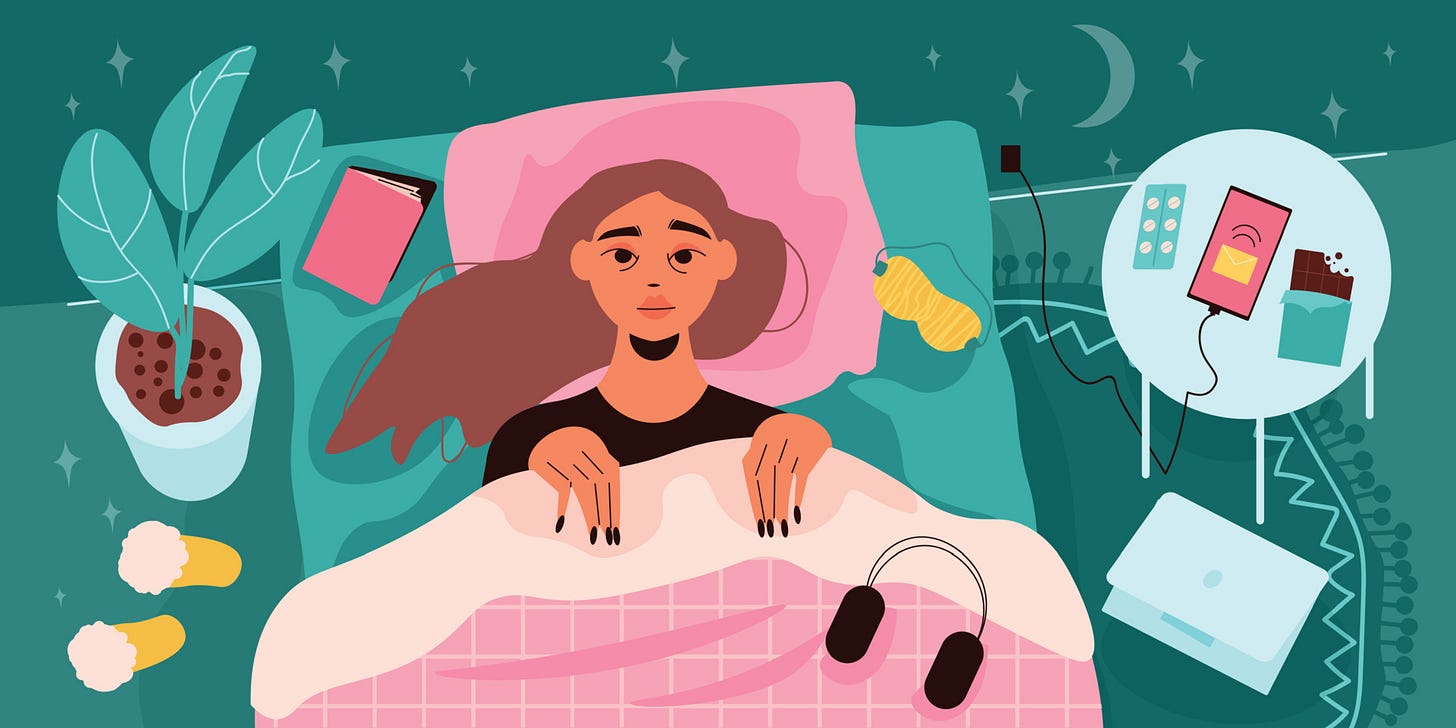
If you wake up exhausted no matter how long you slept. If you’ve been told it’s anxiety, depression, perimenopause, or just stress and treated for all of those and you still feel like something isn’t right. If you’ve quietly wondered whether there’s something nobody has actually looked for yet.
There might be.
Sleep disorders are among the most under-evaluated contributors to everything we cover in this series: mood, weight, blood pressure, hormonal imbalance, insulin resistance. Two conditions in particular are being missed at a scale that should concern everyone: obstructive sleep apnea and chronic insomnia. They’re different problems with different biology. They frequently coexist. And both are doing considerably more damage than most people realize, not just to sleep quality, but to the cardiovascular system, metabolism, hormones, and mental health.
I want to tell you about a patient who changed the way I think about this.
Her cardiologist referred her for antidepressants.
Her primary care doctor had already tried two. She’d seen a therapist for six months working on sleep hygiene and anxiety. She was eating well, exercising, not drinking. She was doing everything right and still waking up every morning feeling like she hadn’t slept, exhausted, foggy, irritable, with a headache that started before she got out of bed.
She came to see me for what she described as “treatment-resistant depression.”
I asked if she snored. She said she didn’t think so. Her husband hadn’t mentioned it. I asked about waking up at night, morning headaches, feeling unrested even after eight hours in bed.
She had all of it.
A home sleep study came back with 22 apnea events per hour. Moderate obstructive sleep apnea. She had never been tested because she didn’t fit the profile. She wasn’t overweight, wasn’t a heavy snorer, wasn’t a middle-aged man. She was a 44-year-old woman in perimenopause whose sleep apnea looked like depression, and for three years it had been treated as exactly that.
Two months on CPAP, and the person sitting across from me was different. Not cured of everything, but present. Clear. Sleeping. Functioning.
I share this story not to be dramatic about it but because it is not unusual. Variations of it walk through my door regularly. And the gap it represents between what was happening and what was being treated is not a failure of individual care. It is a systemic failure to recognize that sleep disorders, particularly in women, often don’t look like what the textbooks describe.
This story is not unusual. Variations of it walk through my door regularly. The gap it represents (between what was happening and what was being treated) is not a failure of individual care. It’s what happens when the right question never gets asked.
This masterclass is about asking it.
Part 1: Recognizing the Pattern
Two Very Different Problems That Often Travel Together
Obstructive sleep apnea (OSA) happens when the muscles of the upper airway relax during sleep, causing partial or complete airway blockage. The brain registers the oxygen drop and triggers a brief arousal to restore breathing often so quick the sleeper never consciously wakes. This can happen dozens or hundreds of times per night. Each event fragments sleep, drops oxygen, and activates the stress response. The person wakes convinced they slept fine because they have no memory of it. Their partner may report snoring, gasping, or pauses in breathing or they may sleep alone and have no witness at all.
Chronic insomnia has a different mechanism entirely. It is not a breathing disorder. It is a disorder of hyperarousal. The nervous system stays in a state of heightened activation that prevents the transition into sleep or causes early awakening. It can be triggered by stress, trauma, hormonal shifts, or a period of disrupted sleep that becomes self-reinforcing through anxiety about sleep itself. Insomnia often has an identifiable origin story that the patient can name. Over time it evolves into a pattern where the bed itself becomes associated with wakefulness, and the harder someone tries to sleep, the more activated the nervous system becomes.
These two conditions travel together frequently, and recognizing this matters. Someone with untreated sleep apnea often develops insomnia as a secondary consequence of fragmented, nonrestorative nights. And someone with chronic insomnia disrupting their sleep architecture may have apnea events that would otherwise be captured in a sleep study but are being obscured by baseline disruption. Treating one while missing the other produces partial results at best.
The Patterns Worth Knowing
OSA in men presents more classically: loud snoring, witnessed breathing pauses, excessive daytime sleepiness, waking with a dry mouth or sore throat, morning headaches. This is the presentation most screening tools and most clinicians are looking for, because most of the research and most of the screening tools were built on male populations.
OSA in women is different — and this is where the diagnostic gap lives. Women with sleep apnea are significantly more likely to present with insomnia, fatigue, morning headaches, mood disturbance, anxiety, and depression rather than obvious snoring and daytime sleepiness [1]. These are the symptoms that send women to psychiatry, not to a sleep lab. Research consistently shows that women are diagnosed with OSA at later stages, have significantly worse quality of life at the time of diagnosis, and are frequently misdiagnosed with depression, anxiety, or hypothyroidism for years before anyone looks at their sleep [1].
The perimenopause transition substantially increases OSA risk in women. Estrogen and progesterone both appear to have a protective effect on upper airway muscle tone. As these hormones decline, OSA risk rises and the symptoms that result overlap so completely with perimenopausal sleep disruption that neither condition gets properly evaluated [1].
Chronic insomnia presents as difficulty falling asleep, difficulty staying asleep, early morning awakening with inability to return to sleep, or waking that feels nonrestorative — on at least three nights per week, for at least three months. The defining feature is daytime impairment: fatigue, cognitive difficulty, mood changes, reduced work performance or relationship functioning. If daytime function is not meaningfully impaired, it isn’t clinical insomnia by the diagnostic definition it’s a sleep preference mismatch, which is a different problem.
What Sleep Deprivation Is Actually Doing
This matters for every topic in this series, because poor sleep is not a standalone quality-of-life issue. It is a metabolic disease driver.
Insufficient sleep defined as less than 7 hours for most adults produces consistent, measurable hormonal changes. Ghrelin (hunger hormone) rises, leptin (satiety hormone) falls, cortisol dysregulates, insulin sensitivity deteriorates, inflammatory markers elevate, and testosterone declines in men. These are not subtle effects. They happen reliably with sleep restriction and they work directly against every other health intervention.
Untreated OSA specifically drives cardiovascular risk through repeated overnight oxygen drops, sustained sympathetic nervous system activation, and inflammatory cascades. The associations between OSA and hypertension, atrial fibrillation, coronary artery disease, and stroke are well-established and mechanistically understood [2]. OSA is not a comfort problem. It is a cardiovascular disease risk factor that happens to cause discomfort along the way.
Part 2: This Is Not in Your Head
The Missed Diagnosis That Costs Years
The woman in my opening story is representative of a pattern. The reason it keeps happening is structural. The most widely used primary care screening tool for OSA, the STOP-BANG questionnaire. It was developed predominantly from studies of male patients and includes snoring, tiredness, observed apnea, high blood pressure, BMI over 35, age over 50, neck circumference over 40cm, and male sex. A woman in perimenopause who is fatigued, has normal BMI, doesn’t obviously snore, and sleeps alone scores low. The questionnaire says she’s low risk, but she has moderate OSA.
The 2025 AASM guidelines on OSA in hospitalized patients mark a meaningful shift toward proactive, pathway-based screening rather than reactive diagnosis [2]. The broader clinical trend is toward recognizing that OSA is underdiagnosed specifically in the populations where it presents atypically. The consequence of missed diagnosis is years of inappropriate treatment alongside progressive cardiovascular, metabolic, and cognitive harm.
For insomnia, the harm is different in kind but equally real. Chronic sleep deprivation accelerates every condition we’ve covered in this series. Someone doing everything right and not sleeping well is working against a significant biological headwind every single day.
The rest of this masterclass — including exactly how to access sleep testing, what the different tests measure and when each is appropriate, the treatment options for OSA beyond CPAP, the behavioral approaches for insomnia that outperform medication in the long run, where supplements actually fit, and the monitoring framework, is available to paid subscribers.
Every piece in this series is written by our clinical team, grounded in peer-reviewed evidence, and built around the questions we hear most often from people who have been treated for everything except what’s actually going on.
Part 3: What Good Testing Actually Looks Like
Diagnosing OSA: Home Testing vs. the Sleep Lab
If OSA is suspected the diagnostic pathway is clear, even if it’s not being offered proactively.
Home sleep apnea testing (HSAT) is the first-line diagnostic approach for most adults with uncomplicated presentations. A small device worn overnight measures airflow, oxygen saturation, respiratory effort, and heart rate. It can be done at home and is interpreted by a sleep specialist. The AASM guidelines support HSAT for adults with a high clinical probability of moderate-to-severe OSA [2]. The limitation is that it records device time, not total sleep time, so it can slightly underestimate severity. For most people it’s an accessible and accurate starting point.
In-laboratory polysomnography (PSG) is the gold standard diagnostic test. It captures everything the home test does plus sleep staging, brain activity, leg movements, and full cardiac monitoring. It is recommended when HSAT results are inconclusive or when other sleep disorders are suspected alongside OSA, parasomnias, narcolepsy, periodic limb movement disorder, or conditions involving significant cardiovascular or respiratory complexity.
For women specifically, I have a lower threshold for recommending in-lab testing rather than home testing. Women with OSA tend to have more REM-predominant disease with breathing events concentrated in REM sleep and lower overall AHI (apnea-hypopnea index) scores despite significant symptoms [1]. A home test that records a shorter total window may miss the period when events are most frequent. This is one of the mechanisms through which women remain underdiagnosed even when testing does happen.
Diagnosing Insomnia: This Is Clinical, Not a Lab Test
Insomnia is diagnosed through clinical evaluation, a sleep study won’t diagnose it and isn’t necessary. What’s needed is a thorough history: onset, pattern, what triggered it, what maintains it, sleep environment and habits, and assessment of daytime impairment.
What I also evaluate in anyone presenting with insomnia:
Medical contributors — thyroid dysfunction, pain conditions, restless legs syndrome, GERD, and respiratory conditions all disrupt sleep. Treating insomnia without addressing these is managing a symptom while the cause continues.
Medication effects — stimulants, certain antidepressants, beta-blockers, corticosteroids, and thyroid medication taken too late in the day are all documented sleep disruptors. A medication review often reveals a fixable contributor that nobody connected to the sleep problem.
Comorbid OSA — up to 50% of people with chronic insomnia also have sleep apnea. Someone who reports lying awake for hours at night may actually be experiencing frequent arousals from apnea events that they’re interpreting as an inability to fall asleep. If there is any clinical suggestion of this, a sleep study belongs in the insomnia evaluation.
Circadian evaluation — delayed sleep phase (unable to fall asleep until the early hours, unable to wake at a conventional time) and advanced sleep phase (falling asleep early and waking at 3–4am) are distinct conditions from classical insomnia with different management approaches.
Part 4: What Actually Moves the Needle
For OSA: There’s More Than One Option
CPAP — continuous positive airway pressure — remains the most effective treatment for moderate to severe OSA. It delivers a constant airstream through a mask that keeps the upper airway open during sleep. When tolerated and used consistently, the improvements in sleep quality, daytime function, blood pressure, blood sugar, cardiovascular risk markers, and mood are real and meaningful [2].
Tolerance is the genuine challenge. Many people find the mask uncomfortable or disruptive, and CPAP adherence is a real clinical problem, not a patient motivation problem.
Oral mandibular advancement devices (MADs) — custom-fitted by a dentist with sleep medicine training, these devices move the lower jaw slightly forward during sleep to widen the upper airway. They are less effective than CPAP for severe OSA, but for mild-to-moderate disease they produce clinically meaningful AHI reduction and substantially better real-world adherence. For many patients, a device they’ll actually use is more effective than a device that stays on the nightstand.
Positional therapy — a significant proportion of OSA events are position-dependent, concentrated in the supine (back-sleeping) position. Wearable positional devices, specialty pillows, or even a simple tennis ball stitched into the back of a sleep shirt can reduce AHI substantially for these patients. It’s underused and often highly effective.
Weight loss — for OSA associated with excess weight, meaningful weight loss produces real AHI reduction. A 10% body weight reduction correlates with approximately a 26% reduction in AHI in some studies. GLP-1 medications producing substantial weight loss are therefore directly relevant to OSA management. The 2025 Canadian obesity pharmacotherapy guidelines explicitly identify OSA as a comorbidity where GLP-1 therapy has specific documented benefit [3].
Hypoglossal nerve stimulation (Inspire therapy) — a small implanted device that stimulates the nerve controlling tongue position during sleep, preventing airway collapse. It has become a meaningful option for people with moderate-to-severe OSA who cannot tolerate CPAP. Patient satisfaction is high in well-selected candidates.
Modifiable contributors — alcohol meaningfully worsens OSA by relaxing upper airway muscle tone. Even moderate alcohol before bed increases apnea events measurably. Nasal congestion from allergies or anatomical factors is a fixable contributor. Hypothyroidism, covered in the previous masterclass, independently worsens OSA and should be addressed in any combined picture.
For Insomnia: Start With CBT-I
Cognitive Behavioral Therapy for Insomnia (CBT-I) is the most effective long-term treatment for chronic insomnia. Not just compared to placebo, compared to sleeping medication. This is the first-line recommendation from every major sleep medicine organization globally, backed by robust clinical trial evidence [2].
CBT-I addresses the behavioral and cognitive drivers of insomnia rather than suppressing symptoms temporarily. Its core components: sleep restriction (counterintuitive but powerfully effective), stimulus control (rebuilding the association between bed and sleep rather than wakefulness), sleep hygiene optimization, and cognitive restructuring of the anxious thoughts about sleep that maintain the problem. The effects are durable unlike medication, which stops working when stopped, CBT-I changes the brain’s arousal patterns in ways that persist.
CBT-I can be delivered by a trained therapist, through structured digital programs, or via self-guided workbooks. If you have chronic insomnia and haven’t tried CBT-I, this is the first step — not a sleeping pill.
Sleep restriction — the most counterintuitive component and the most powerful. By initially limiting time in bed to match actual sleep time, it builds sleep pressure that makes falling and staying asleep genuinely easier. The first week or two are uncomfortable. The durability of the results is worth it.
Morning light exposure — bright light within the first hour of waking anchors the circadian clock, promotes earlier melatonin onset in the evening, and improves sleep onset at night. This is not optional self-care. It is a circadian intervention with documented biological effect. Ideally natural sunlight; a bright light therapy lamp works when that isn’t possible.
Where supplements fit in:
Magnesium glycinate — magnesium is required for GABA receptor function (GABA is the brain’s primary calming neurotransmitter), cortisol regulation, and sleep architecture. Deficiency is genuinely common and often contributes to difficulty staying asleep and nighttime awakening. Glycinate form is better absorbed and better tolerated than the oxide form that dominates retail. This is one of the most consistently useful supplements I recommend for sleep.
Melatonin — widely misunderstood and misused. Melatonin is a circadian timing signal, not a sedative. Low doses (0.5–1mg) taken 1–2 hours before the desired sleep time help shift the circadian clock earlier. The high doses on retail shelves (5–10mg) are pharmacologically supraphysiological and can dysregulate circadian rhythms over time. For jet lag and circadian phase issues, melatonin is evidence-based and appropriate. For chronic insomnia, it is not the solution.
Ashwagandha (KSM-66 extract) — has the most consistent clinical evidence among adaptogenic herbs for both sleep quality and anxiety reduction. Several randomized trials in healthy adults and in people with insomnia have shown meaningful improvements in sleep onset, duration, and perceived quality [4]. It’s a reasonable adjunct for anxiety-driven insomnia, not a primary intervention.
Phosphatidylserine — helps reduce evening cortisol in people with HPA axis overactivation, the physiological pattern that produces the “tired but wired” experience, exhausted through the day but unable to settle at bedtime. Evidence is modest but consistent for this specific presentation.
The Honest Conversation About Sleep Medication
Benzodiazepines and Z-drugs (zolpidem, eszopiclone) suppress sleep symptoms without addressing their cause, produce tolerance and dependence with regular use, impair sleep architecture, and carry significant fall and cognitive risks especially in older adults. They have a role in acute insomnia management. They are not appropriate as long-term primary treatment for chronic insomnia.
Low-dose doxepin and orexin receptor antagonists (suvorexant, lemborexant) have better-fitting mechanisms and safety profiles for specific insomnia presentations. These are worth knowing about if medication is needed.
My approach: CBT-I first. Evaluate and address contributing factors: thyroid, sleep apnea, anxiety, cortisol patterns. Optimize nutritional and circadian factors. Use medication judiciously for the acute phase or as a bridge while behavioral work takes hold, not as the long-term solution.
Part 5: Retesting and What to Watch
The 4-Week and 3-Month Check-In
For OSA on CPAP: most modern machines generate compliance data: hours of use, residual AHI on therapy, mask leak rates. A 4-week review of this data tells you whether the pressure settings are adequate and whether there are mask or interface issues to address. Adequately treated OSA should produce a residual AHI below 5, good overnight oxygen saturation. Usually within 2–6 weeks, there should be meaningful improvement in daytime energy and cognitive clarity. If you’re using it consistently and not improving, the settings or the delivery interface likely need adjustment.
For insomnia on CBT-I: a sleep diary for the first 4–6 weeks is essential. Record time to bed, estimated time to fall asleep, number of awakenings, wake time, and estimated total sleep. This data guides the sleep restriction component and allows objective tracking in a domain where subjective experience often lags behind objective improvement. Most people see meaningful change by 6–8 weeks.
Blood markers worth reviewing alongside sleep treatment: inflammatory markers (CRP), blood pressure, fasting glucose, and cortisol. Treated OSA produces measurable improvements in all of these. If metabolic markers aren’t improving alongside sleep, there may be additional contributors to investigate.
Track at home: energy on waking before caffeine, headache frequency, mood consistency, cognitive sharpness mid-morning, and exercise tolerance. If you have a wearable device, heart rate variability during sleep is a useful proxy for how well the nervous system is recovering overnight.
Return sooner than scheduled if: OSA symptoms return after a period of stable treatment (mask seal may have degraded, pressure may need adjustment), new cardiac symptoms develop, insomnia significantly worsens, or sleep disruption appears following a medication change.
Where to Go From Here
Sleep is not passive time. It is the period during which your immune system builds its defenses, your brain clears metabolic waste, your hormones reset, your cardiovascular system recovers, and your insulin sensitivity restores. Nothing else you do for your health operates independently of how well you sleep.
If you’ve been tired for years and been told it’s anxiety, stress, depression, or just how you are, consider whether anyone has actually looked at your sleep. Not asked about it…actually looked at it, with data.
The woman in my opening story is sleeping now. Her treatment-resistant depression resolved when we treated the sleep apnea that was causing it. That’s not a remarkable outcome. That’s what happens when the right diagnosis finally gets made.
If any of this resonated and you want to understand what’s actually going on with your sleep, that’s a conversation we’re glad to have.
Get the next one as it's written.
New articles on hormones, gut health, thyroid, and metabolic health — free, by email, as soon as they publish.
Sources & Research
Every claim in this article is grounded in peer-reviewed research. DOI links open the original studies.
Seda G, Han TS. Effect of obstructive sleep apnea on neurocognitive performance, fatigue, and sex differences. Sleep Medicine Clinics. 2020;15(1):77–85. doi:10.1016/j.jsmc.2019.11.005; see also: Theorell-Haglöw J, Lindberg E. Sex differences in obstructive sleep apnea. Current Sleep Medicine Reports. 2016;2(2):71–78. doi:10.1007/s40675-016-0041-9
American Academy of Sleep Medicine. Evaluation and management of obstructive sleep apnea in adults hospitalized for medical care: an AASM systematic review, meta-analysis, and GRADE assessment. Journal of Clinical Sleep Medicine. 2025. doi:10.5664/jcsm.11866
Pedersen SD, Manjoo P, Dash S, Jain A, Pearce N, Poddar M, et al. Pharmacotherapy for obesity management in adults: 2025 clinical practice guideline update. CMAJ. 2025;197(27):E797–E809. doi:10.1503/cmaj.250502
Cheah KL, Norhayati MN, Husniati Yaacob L, Abdul Razak AR. Effect of ashwagandha (Withania somnifera) extract on sleep: a systematic review and meta-analysis. PLOS ONE. 2021;16(9):e0257843. doi:10.1371/journal.pone.0257843