If you’ve been exhausted for longer than you can remember, if your hair has been thinning and your weight won’t budge no matter what you do, if you’re cold when everyone around you is fine, and foggy when you used to be sharp. You’ve been told your labs look normal, I want you to read this carefully.
Because “normal” and “fine” are not the same thing. And nowhere is that gap more consequential than in thyroid medicine.
The thyroid is one of the most routinely checked organs in medicine and one of the most poorly evaluated. That’s not a contradiction, it’s the problem. Most standard thyroid panels check one number: TSH. And TSH alone can look completely normal while the thyroid system underneath it is struggling. It’s like checking the thermostat on the wall and declaring the heating system fine. The thermostat reads normal. The furnace is barely functioning.
I see this pattern constantly. One patient I think about often had been to three doctors in two years. Fatigue so heavy it felt like moving through water. Hair coming out in the shower in amounts that alarmed her. Weight climbing even though she was eating less than ever. Cold when no one around her was. A brain fog so thick she’d started writing herself notes for conversations she’d already had. Each time, she was told her labs were fine. Her TSH was in range.
She came to me and I ran a full panel: TSH, free T3, free T4, and thyroid antibodies. Within a week we had the answer: Hashimoto’s thyroiditis with subclinical hypothyroidism. Her TSH was technically in the normal range. But her free T3, the active form of thyroid hormone that actually gets into your cells, was at the very bottom of it. And her antibodies were significantly elevated, meaning her immune system had been quietly attacking her thyroid for years.
Two years. Three doctors. One blood test that should have been ordered from the start.
I’m not telling you this to criticize those clinicians, they were following standard protocol exactly as they should. I’m telling you because the standard protocol has a gap, and that gap is failing a lot of people. This masterclass is about what a proper thyroid evaluation actually looks like, what Hashimoto’s really means for your health, and what it takes to feel genuinely well… not just “in range.”
Part 1: Recognizing the Pattern
Why Thyroid Problems Are So Easy to Miss
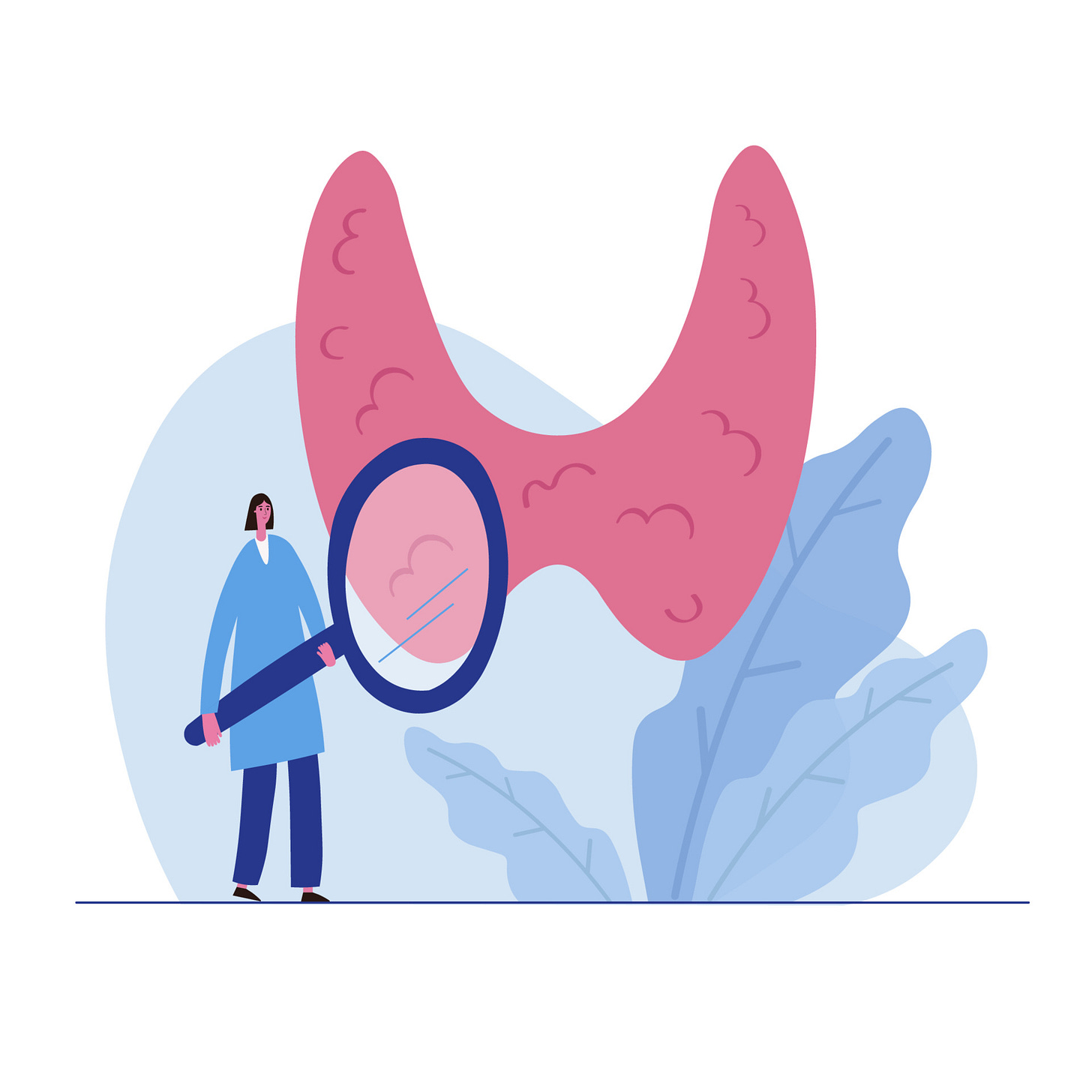
Your thyroid is a small butterfly-shaped gland at the base of your throat that runs your metabolism in the most literal sense. It produces hormones primarily T4 and T3, that tell every cell in your body how to use energy. Not just your metabolic rate. Every cell. Your heart rate, body temperature, digestion, mood, memory, skin, hair, fertility, and cholesterol metabolism. When thyroid function slows down, all of these systems slow together.
This is exactly why thyroid problems are so easy to miss. People come in describing fatigue, weight gain, cold intolerance, constipation, dry skin, hair thinning, brain fog, low mood, elevated cholesterol, and irregular periods. Because no single symptom points clearly to the thyroid, each one gets addressed in isolation while the underlying cause goes untreated. You end up with five separate problems when there was really only one all along.
The Patterns Worth Knowing
Classic hypothyroidism looks like fatigue that doesn’t improve with rest, unexplained weight gain, feeling cold when others are comfortable, dry skin, hair thinning or loss, particularly the outer third of the eyebrows, which is a specific and telling sign. Constipation, slowed heart rate, and a persistent low mood that doesn’t respond to lifestyle changes. This is the presentation most clinicians recognize and look for.
Hashimoto’s thyroiditis is the most common cause of hypothyroidism in iodine-sufficient countries, and it is fundamentally different from simple thyroid underperformance. Hashimoto’s is an autoimmune condition: the immune system produces antibodies that gradually destroy thyroid tissue. What makes it clinically distinct is that it can cause fluctuating symptoms: periods of feeling relatively normal alternating with flares of fatigue, brain fog, and mood disturbance, as the inflammatory process waxes and wanes. Some people with Hashimoto’s also experience transient spells that feel more like hyperthyroidism: anxiety, palpitations, insomnia, as damaged tissue releases stored hormone. These episodes get misattributed to stress constantly [1].
Subclinical hypothyroidism is where the most clinical disagreement lives, and where the most patients fall through the cracks. It is defined as elevated TSH with normal free T4 and T3. By conventional guidelines, many patients in this category are not offered treatment unless TSH rises above 10 mIU/L [2]. But “subclinical” does not mean asymptomatic. Research consistently shows that people in this category experience real reductions in quality of life, cardiovascular changes, lipid dysregulation, and cognitive symptoms, especially when TSH is consistently above 4–5 mIU/L [3]. The decision to treat should incorporate symptoms and the full clinical picture, not a TSH number alone.
Thyroid dysfunction in perimenopause deserves specific attention because it is one of the most commonly missed overlaps in women’s health. Declining estrogen directly affects thyroid hormone binding and metabolism. Women who were well-compensated before their 40s can develop symptomatic thyroid dysfunction during the perimenopause transition, and the symptoms overlap so completely with perimenopause itself: fatigue, mood changes, weight shifts, sleep disruption, that neither gets properly evaluated. If you’re in your 40s and your symptoms fit both patterns, both genuinely need to be investigated.
Part 2: This Is Not in Your Head
Why “Normal” Doesn’t Always Mean Fine
I want to explain something that I think every patient deserves to understand.
TSH stands for thyroid-stimulating hormone. It’s produced by the pituitary gland and tells the thyroid to make more hormone. When thyroid output falls, the pituitary raises TSH sending a louder signal. So elevated TSH is indeed a marker that the thyroid is underperforming.
Here’s the problem. The “normal” TSH range used in most labs (roughly 0.4 to 4.5 mIU/L) was established from population studies that included people with undiagnosed thyroid disease. The upper end of “normal” includes people who were already symptomatic and simply hadn’t been diagnosed. Many endocrinologist working in this space believe that for a symptomatic patient, a TSH consistently above 2.5 mIU/L warrants further investigation, meaning a full free hormone panel and antibody testing, not a “we’ll repeat it in a year” [2, 3].
The second problem is that TSH tells you nothing about what’s happening downstream. T4 is the main hormone the thyroid produces, but it’s largely inactive on its own, it has to be converted to T3, the active form, in the liver, kidneys, and other tissues. Some people convert T4 to T3 poorly, particularly under chronic stress, with certain nutritional deficiencies, or in the presence of inflammation. Their TSH and T4 can look perfectly normal while their T3 is low at the cellular level. Standard panels miss this entirely.
This is why people can have every symptom of hypothyroidism while being told their results are normal. The test being ordered is not asking the right question.
I’ve had patients come to me on levothyroxine,the standard T4 medication, for years, still exhausted, still gaining weight, still foggy. Their TSH was controlled. They were not feeling controlled. When we checked their free T3, it was at the floor. That’s a different problem requiring a different conversation.
The rest of this masterclass including what every marker in a complete thyroid panel actually tells you, the full Hashimoto’s workup, the supplement interventions with the strongest evidence, what the research actually says about T4/T3 combination therapy, and the monitoring framework is available to paid subscribers.
Every piece in this series is written by our clinical team, grounded in peer-reviewed evidence, and built around the questions we hear most often from patients who’ve been told their results are fine and still don’t feel fine.
Part 3: What Good Testing Actually Looks Like
The Full Panel — What Each Number Is Telling You
A complete thyroid evaluation is not a TSH. Here’s what it actually includes:
TSH is the starting point, not the conclusion. An elevated TSH signals the pituitary is working harder to drive the thyroid. But a normal TSH does not mean a normal thyroid system. It means the pituitary’s feedback loop is currently compensated.
Free T4 (fT4) is the main hormone the thyroid produces. “Free” means unbound the portion that’s actually available to be used by your body. If fT4 is low, the thyroid isn’t producing adequately. If it’s normal but symptoms are present, we need to look at what’s happening to it downstream.
Free T3 (fT3) is the active form that gets into cells and actually runs metabolic function. This is the number most often absent from standard panels and most often explaining why symptomatic people have been told everything is fine. Low fT3 with normal TSH and fT4 points to a conversion problem: a downstream failure that is just as clinically impactful as a production failure.
Reverse T3 (rT3) is an inactive form of T3 that competes with active T3 at the same cellular receptor. Under chronic stress, significant illness, or prolonged caloric restriction, the body shifts toward producing more rT3 as a metabolic brake. Elevated rT3 can produce every symptom of hypothyroidism even when other markers look fine. I request this in patients with persistent symptoms despite reasonable-looking panels.
TPO antibodies (anti-thyroid peroxidase) are the primary marker for Hashimoto’s. Elevated TPO antibodies indicate an autoimmune attack on the thyroid — even before thyroid function has measurably changed. Catching this early matters: it identifies people at risk for progressive thyroid decline, explains the fluctuating symptoms, and opens a completely different treatment conversation around the immune process itself [1].
Thyroglobulin antibodies (anti-Tg) are a secondary autoimmune marker. Some people with Hashimoto’s have elevated anti-Tg but normal TPO antibodies, so testing both increases the likelihood of catching it [1].
Timing — thyroid labs should be drawn in the morning, ideally fasting, and before taking thyroid medication if you’re already on it. Afternoon draws and post-medication draws can produce misleading results.
Part 4: What Actually Moves the Needle
The Hashimoto’s Approach Is Different
Treating Hashimoto’s as if it’s simple hypothyroidism, replacing hormone and monitoring TSH, addresses the downstream consequence while the upstream cause continues. The autoimmune process doesn’t pause because TSH has normalized. Left unaddressed, it drives progressive destruction of thyroid tissue and ongoing inflammatory symptoms even when hormone levels look stable.
Selenium is the most evidence-supported nutritional intervention in Hashimoto’s. Multiple randomized controlled trials have shown that selenium supplementation (typically 200 mcg daily of selenomethionine) significantly reduces TPO antibody levels and improves thyroid tissue appearance on ultrasound over a period of months [1]. The thyroid contains the highest concentration of selenium of any organ in the body, and selenoproteins are critical for both thyroid hormone synthesis and the antioxidant defense that protects thyroid cells from immune-mediated damage. When selenium is depleted, Hashimoto’s tends to progress faster. This is one of the most robust supplement recommendations in integrative medicine not because it sounds good, but because the trial data is consistent.
Vitamin D is consistently low in people with autoimmune thyroid disease. Multiple studies show that Hashimoto’s patients have lower levels than matched controls, and that correcting those levels is associated with reduced antibody burden [1]. I’m not looking for vitamin D to be “sufficient” in the lab’s terms, I want levels above 60 ng/mL. There is a meaningful clinical difference between a level of 25 ng/mL (which most labs call normal) and 65 ng/mL when it comes to immune regulation in autoimmune disease.
Gluten and Hashimoto’s — this is a nuanced area and I want to be honest about it. There is a real association between Hashimoto’s and celiac disease: rates of celiac disease are meaningfully higher in people with Hashimoto’s than in the general population, and untreated celiac can worsen thyroid autoimmunity [1]. For people who test positive for celiac or gluten sensitivity, a strict gluten-free diet is a clinical priority, not a wellness preference. For Hashimoto’s patients without confirmed celiac disease, the evidence for gluten elimination is less definitive but some patients notice real symptom improvement on a trial. My recommendation: test properly first (anti-tissue transglutaminase antibodies, anti-endomysial antibodies) before assuming, because the testing becomes unreliable once someone has already eliminated gluten.
Iodine — this is the area where wellness content tends to go wrong. Iodine is necessary for thyroid hormone synthesis, and deficiency causes hypothyroidism. But in people with established Hashimoto’s, high-dose iodine supplementation can trigger or worsen autoimmune flares. I ensure adequate dietary iodine through food sources. I don’t recommend iodine supplementation in Hashimoto’s patients.
Zinc and iron — both are needed for T4-to-T3 conversion. Iron deficiency impairs thyroid function at multiple levels and is common in women with Hashimoto’s — often because heavy menstrual periods, which can themselves be a consequence of hypothyroidism, deplete iron over time. A full iron panel,not just hemoglobin, is part of every thyroid workup in my practice.
The Medication Conversation
The standard treatment for hypothyroidism is levothyroxine, synthetic T4. For the majority of patients this works well: TSH normalizes, symptoms resolve, and no further adjustment is needed.
But a meaningful subset of patients on levothyroxine continue to feel unwell despite a normal TSH. The 2014 ATA guidelines (which remain the primary reference document for hypothyroidism treatment) concluded that levothyroxine monotherapy should remain the standard of care, finding no consistent evidence that combination T4/T3 therapy produces superior outcomes [2]. What they also acknowledged, and what the subsequent decade of research has reinforced, is that persistent symptoms in treated patients are real and require further evaluation of T3 conversion, of nutritional status, of other contributing conditions [2, 3].
The European Thyroid Association has taken a more open position: in patients with persistent symptoms despite optimized levothyroxine therapy, a supervised trial of combination T4/T3 therapy may be considered after other causes have been excluded. This is not a recommendation to move everyone to combination therapy. It is an acknowledgment that TSH-controlled does not always mean symptom-controlled, and that some patients have a T3 need that T4-only therapy cannot fully meet.
Desiccated thyroid extract (DTE), which contains both T4 and T3 from animal thyroid glands, is another option some patients prefer, particularly those who report feeling better on it despite adequate-looking labs on levothyroxine. The evidence base is more limited, but patient response, symptom experience, and individual conversion differences are all legitimate factors in this conversation.
My clinical approach: optimize the full panel, not just TSH. Address selenium, vitamin D, zinc, and iron before drawing conclusions about medication adequacy. If someone is on levothyroxine with a controlled TSH and a low-normal free T3 and still feels poorly, that’s a conversation worth having, not a reason to be reassured.
Part 5: Retesting and What to Watch
The 6-Week and 6-Month Framework
After starting or adjusting thyroid medication, TSH and free hormone levels should be rechecked at 6–8 weeks. Thyroid hormone changes move slowly. The pituitary takes weeks to register a new dose, so earlier retesting produces misleading results and unnecessary adjustments [2].
For Hashimoto’s specifically, I recheck TPO antibodies at 6 months when we’ve introduced selenium or made meaningful dietary changes. Antibody levels respond more slowly than symptoms do. A 3-month recheck often shows no movement even when the patient genuinely feels better, and that’s still progress.
Once stable, I review the full panel annually, not just TSH. A TSH that slowly drifts upward over years while symptoms quietly return is a signal worth catching early. Either the medication needs adjustment or the autoimmune process is advancing.
Track at home: energy levels, sleep quality, morning body temperature (consistently below 97.8°F on waking can suggest undertreated hypothyroidism in some patients), hair loss, bowel regularity, and cold tolerance. These are the signals that tell you whether treatment is working in practice, not just on paper.
Return sooner if: symptoms significantly worsen after a period of stability, heart palpitations or unusual warmth develop (which can indicate over-treatment or a Hashimoto’s flare), or you become pregnant. Thyroid hormone requirements increase substantially in pregnancy, often within the first few weeks, and doses typically need adjustment quickly [2].
What to Ask For
If you’ve been told your thyroid is fine based only on TSH, ask specifically for: free T3, free T4, TPO antibodies, and thyroglobulin antibodies. If you’re already on levothyroxine with a normal TSH and still feel unwell, ask whether your free T3 has been measured, and what it actually is. If it’s sitting in the lowest quarter of the reference range while your symptoms persist, that’s a conversation worth pursuing… not a reason to accept that this is just how you feel now.
Where to Go From Here
The thyroid is not a simple gland with a simple dial. It is part of a hormonal cascade involving the brain, the pituitary, the liver, the immune system, and every cell in your body. Evaluating it through a single number and declaring everything fine is not thyroid medicine. It is TSH management, and those are not the same thing.
You deserve a workup that asks the right questions. A clinician who takes your symptoms seriously even when your labs look acceptable. A treatment plan that addresses what’s actually driving the problem, not just what the number on a report reflects.
If you’ve recognized yourself in any of this and want to understand what your full picture looks like, that’s exactly where we start.
Get the next one as it's written.
New articles on hormones, gut health, thyroid, and metabolic health — free, by email, as soon as they publish.
Sources & Research
Every claim in this article is grounded in peer-reviewed research. DOI links open the original studies.
Klubo-Gwiezdzinska J, Wartofsky L. Hashimoto thyroiditis: an evidence-based guide to etiology, diagnosis and treatment. Polish Archives of Internal Medicine. 2022;132(3):16222. doi:10.20452/pamw.16222
Jonklaas J, Bianco AC, Bauer AJ, et al. Guidelines for the treatment of hypothyroidism: prepared by the American Thyroid Association Task Force on Thyroid Hormone Replacement. Thyroid. 2014;24(12):1670–1751. doi:10.1089/thy.2014.0028
Idrees T, Palmer S, Braunstein GD, Swerdloff RS. Subclinical hypothyroidism, outcomes and management guidelines: a narrative review and update of recent literature. Current Medical Research and Opinion. 2023;39(3):351–365. doi:10.1080/03007995.2023.2165811